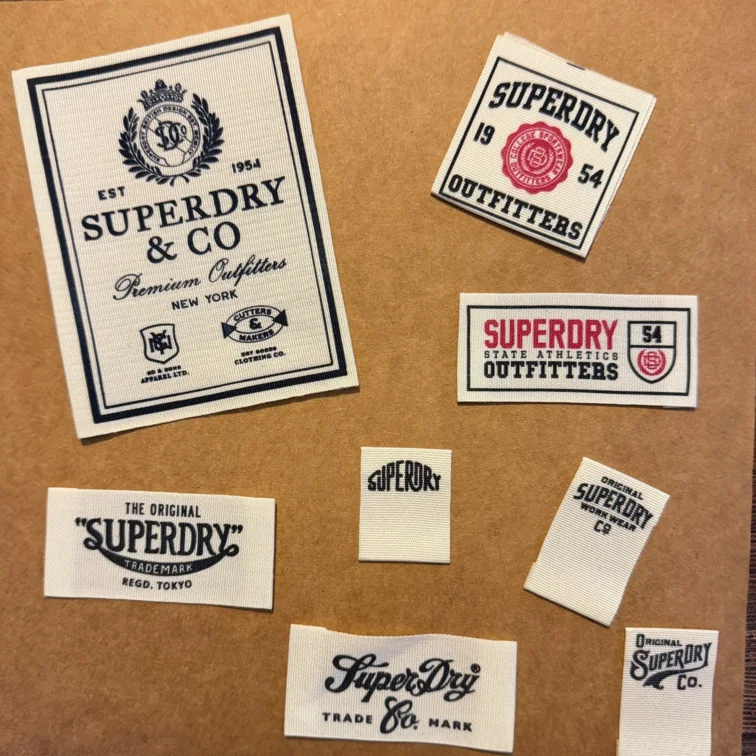
Watch someone shop for clothes and you will see the same sequence again and again. They touch the fabric, they turn the garment around, and they look inside the collar. In those few seconds they are building a judgement about quality, and the label is one of the few things they look at on purpose.
Why the inside matters
The outside of a garment is designed to be seen. The inside shows how carefully it was made. A crooked label, a scratchy edge or a logo that has lost its definition sends a quiet message that corners were cut somewhere. A neat, well-proportioned label stitched straight along the seam suggests the opposite, even to people who could not explain why.
Four signals customers pick up
- Hand. Is the label soft or stiff? Satin and fine damask feel more refined than a coarse taffeta, especially at the neck.
- Edge. A clean, sealed or woven edge feels finished. A rough cut feels temporary.
- Definition. Sharp lettering, even at small sizes, signals precision.
- Proportion. A label sized to the garment looks intentional. One that is too large for a delicate top looks like an afterthought.
Consistency across the set
Perceived quality is cumulative. If the main label is beautiful but the care label is printed in a different typeface on a stiff tape, the customer notices the mismatch even without naming it. Plan the main label, the care label and the hang tag together so colours, type and materials agree with each other.
The label is the part of the garment that keeps speaking after the shop assistant has stopped.
Small upgrades with a large effect
You do not need to change everything at once. Some of the most noticeable improvements are modest:
- Switching the neck label to a softer weave or adding a soft coating.
- Choosing a woven or ultrasonic edge instead of a plain cut.
- Giving the logo a little more breathing room on the label.
- Matching the hang tag cord to the label colour.
Testing it yourself
Put your current garment next to a piece you consider well made, close your eyes and compare only the labels by touch. Then look at them side by side under good light. The differences you notice in that minute are exactly what your customers notice too, and they are usually simple to address at the next production run.